Countertops in Temecula, CA
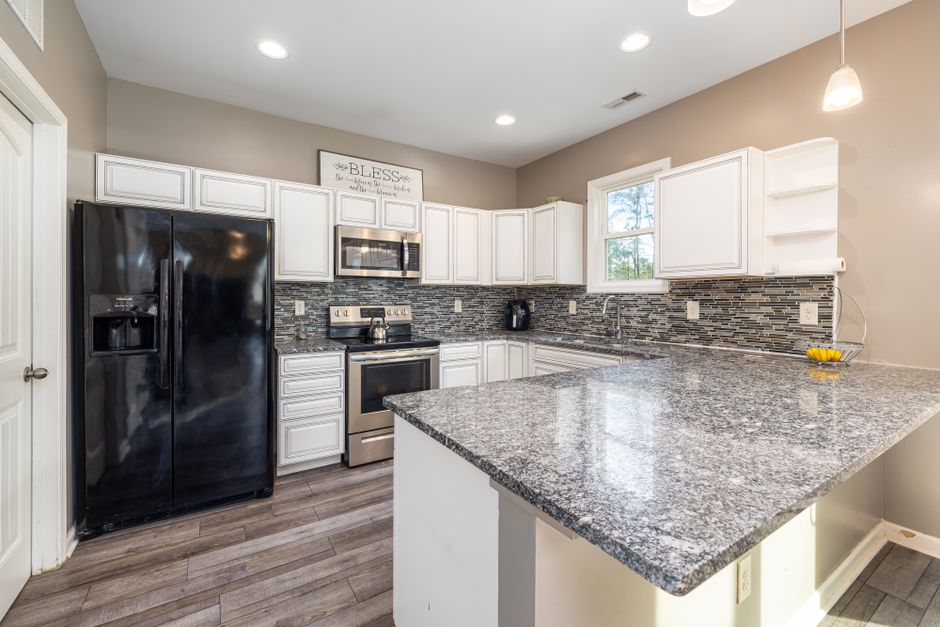
Local notes on custom countertop installation in Temecula, CA.
What We Cover
- Concrete Counters in an Older Home What a poured or precast concrete countertop asks of the cabinets and the owner in an older Temecula area home.
- Marble on a Bathroom Vanity Top What etching and patina look like on a marble vanity top, and how a Temecula homeowner decides if that wear suits the room.
- Porcelain Slab for Outdoor Kitchens How porcelain slab handles Temecula sun, heat swings and grills on an outdoor kitchen counter, and where the edges are weak.
- Quartzite for a Hot Temecula Kitchen How natural quartzite behaves in a sunny Temecula kitchen, how to tell it from marble, and what the sealer test shows.
- Sintered Stone for a Large Island Comparing sintered stone and quartzite slabs for a big island, covering slab size, seams, heat and sealing on a Temecula job.
- Soapstone for a Home Bar Why soapstone suits a wine-tasting nook or home bar in a Temecula house, and how oiling and scratches are handled.
Countertops in Temecula, CA
Most kitchens in Temecula, CA get granite or quartz, and the crew sets those every week. The less common stones come up when a homeowner wants a wine-tasting nook, a stone vanity in a guest bath, or an outdoor kitchen that sits in full sun. Each of those jobs starts on the shop floor with a sample, a glass plate and a spoon of water.
Natural stone beyond granite
Quartzite is the one that gets asked for most when sun is the problem. It is hard, it does not yellow, and a good slab outlasts a gas range. Marble is chosen for the look, with etching accepted as patina. Soapstone suits a bar, since red wine sits on it and wipes off. Each one is cut, sealed and edged differently, and the crew explains the differences at the yard.
Porcelain, sintered stone and concrete
Porcelain slab and sintered stone come in large panels with no sealer, which suits an outdoor kitchen or a long island. Their edges need care, since a thin corner chips. Concrete is the odd one out: heavy, handmade and sometimes cracked a little, and the cabinets underneath need reinforcing before it goes in, especially in older houses near Murrieta Creek.
What the Temecula area does to a surface
Sun through patio doors, hard water from the Temecula Valley, and wide swings between hot afternoons and cool nights all show up on stone. Homes in Riverside County range from tract builds with narrow doorways to older ranch houses with weaker cabinets, and the crew plans the carry route and the supports before a slab is cut. A bar built for the Temecula Valley wine country crowd sees spilled red every weekend, and the stone is picked with that in mind.
Guides
The pages here cover quartzite, marble vanity tops, soapstone bars, porcelain outdoor kitchens, concrete in older homes, and sintered stone islands. Each one walks through the mechanics of that surface, from templating to the first week of use.
Latest Guides
Caring for Quartzite, Marble, Soapstone and Porcelain in Hard Water
Hard water, strong sun and dry heat all leave marks on a countertop, and the marks differ from one stone to the next. A routine that works for quartzite will slowly damage marble, and a routine that suits soapstone would be wasted on porcelain. The questions below come up again and again from people living with a less common surface in a Temecula home, and the answers lean on how each material actually behaves rather than on a general rule.
Why do white rings show up on a counter near the faucet?
Water in the Temecula area carries dissolved minerals, mostly calcium and magnesium. When a drop dries, the water leaves and the minerals stay, forming a pale ring or a cloudy patch. The rings sit on the surface and wipe off a sealed top, but on a polished dark stone they are easy to see.
The simplest habit is to dry the area around the faucet after use. A small squeegee or a folded towel kept by the sink does the job in seconds. A honed finish hides rings better than a polished one, which is why many bathroom vanity tops here are specified honed.
Can vinegar be used to remove mineral rings?
On porcelain, sintered stone and most engineered surfaces, a diluted vinegar wipe followed by a rinse is acceptable. On marble it is not. Marble is calcium carbonate, and vinegar dissolves it, leaving a dull etch that looks like the ring did, only permanent. The same warning applies to limestone and to some soft quartzites.
Concrete and soapstone sit in between. Soapstone is not harmed by acid, but a wipe of vinegar can strip the oil finish and leave pale patches. Concrete reacts like marble if its sealer has worn through. When in doubt, test a drop on a remnant or the underside of a cutout piece, since most fabricators keep these.
How often does a natural stone need sealing?
The honest answer is that it depends on the stone, and a simple test replaces the calendar. Put a spoonful of water on the surface and watch it. If the water beads and stays round for fifteen minutes, the sealer is working. If it spreads and darkens the stone, the sealer has worn and a new coat is due.
Quartzite varies widely. A dense piece may go years between coats, and a porous one may need attention more often. Marble needs sealer for stain protection, though it does nothing for etching. Porcelain and sintered stone need none at all, because the body of the slab does not absorb. Concrete relies on its sealer or wax for everything, so it is the one surface that really does need regular upkeep.
What is the right way to oil and wax soapstone?
Soapstone is non-porous, so oil does not protect it. Oil changes the colour. Raw soapstone is a pale grey that darkens to near black with oil, and the darkening evens out the surface. Mineral oil, applied with a cloth and wiped off after a few minutes, is the usual choice. Wax over the oil gives a slightly deeper, softer sheen.
In the first weeks the stone drinks oil unevenly, and the top may look patchy. A light coat every few days, then every few weeks, lets it settle. After that, a coat when the surface starts to look dry is enough. A scratch from a knife or a pan is sanded out with fine paper, oiled again, and gone within an hour.
How does sun affect each surface?
Natural stone, including quartzite, marble and soapstone, does not fade in sunlight in any way a homeowner will notice. Porcelain is fired at very high temperature and carries its colour the same way, so it holds up outdoors. Engineered products with a resin binder are the ones to watch near a window wall or a patio door, because the resin can yellow over the years.
Sun is also a heat source. A window ledge or an island that sits in direct afternoon light can become hot to the touch. Stone handles it. A sealer or wax finish may thin faster on a sun-baked area, and that patch will pass the water test sooner than the rest of the top. Check the sunniest part first.
What should be kept off the surface?
The list is short and differs by material.
- Marble: lemon, vinegar, wine left to sit, toothpaste, hair products.
- Concrete: the same acids, plus anything that can stain before the sealer is refreshed.
- Quartzite: nothing serious once sealed, though a trivet is a good habit for pans straight off a burner.
- Soapstone: nothing from the kitchen, but a heavy ceramic pot dragged across it will scratch.
- Porcelain and sintered stone: sharp blows on an edge, and heavy objects dropped on a corner.
How can a chip or crack on an edge be handled?
A small chip on an eased edge or a bullnose can often be filled by a fabricator with a colour-matched resin and polished flush. A chip on a mitered edge of porcelain is trickier, since the core of the slab differs from its face. A crack that runs from a sink cutout corner points to a stress problem, and it should be looked at before it spreads, because water and cleaners will get in and the edges will lift.
Most cracks near an undermount sink come from weak support or a tight corner radius, and neither is a homeowner mistake. A fabricator who made the top will usually recognise the pattern at a glance.
Does a bar or wine nook need different care?
A bar top takes spills of wine, citrus and spirits, and the acid matters. On soapstone, quartzite that has been sealed, porcelain and sintered stone, a spill is wiped off and that is that. On marble and unsealed concrete, a spill left overnight will mark. Homes in the Temecula Valley wine country that entertain often tend to pick soapstone or porcelain for the bar run for that reason, and keep marble for a different room.
Coasters help on every material. A bar nook with an undermount sink for rinsing glasses should have its cutout edges sealed too, since that area stays wet longer than the rest.
What cleaners are safe to use daily?
A soft cloth, warm water and a few drops of neutral dish soap cover almost every surface in this article. Skip abrasive powders, which dull a polished finish, and skip bleach on anything with a sealer, since it breaks the sealer down. Spray cleaners labelled for stone are fine if they are pH-neutral. Glass cleaner with ammonia dulls some stones over time.
For a bathroom vanity, rinse after hair products and toothpaste rather than letting them dry. Dry skin products and perfumes can leave oily spots on porous stone, and a quick wipe the same day does more than a long scrub a week later.
How can wear be checked before it becomes a problem?
A few minutes twice a year is enough. Run a hand along the edges to feel for chips. Look at the seams for any gap or lift. Do the water test at the sink, the stove and the sunniest spot. Look under the sink for any sign of moisture reaching the underside of the top. Anyone living near Murrieta Creek or the Santa Margarita River, where humidity can rise in some seasons, may want to look at the underside of a vanity top a little more often.
A surface cared for in small, regular ways rarely needs a big repair. Most of the damage seen at the shop comes from one acid spill left overnight or one heavy drop on a corner.
Reading a Stone Slab at the Yard Before It Is Cut
A slab yard is the one place in a countertop job where the homeowner can still change the outcome cheaply. After the stone is cut, every choice is locked in. Before it is cut, a slab can be rejected, rotated, swapped for its neighbour or set aside for a different room. People in Temecula who are weighing quartzite, marble, soapstone or porcelain for a kitchen, a vanity or a wine-tasting nook tend to arrive at the yard with a photo and leave with a decision made in ten minutes. A slower walk pays off.
What is a slab yard visit actually for?
The yard visit exists to match one specific piece of stone to one specific piece of cabinetry. A sample board in a showroom shows colour. It does not show the veining that runs across the full length, the dark band near one end, or the hairline that sits where the sink cutout would fall. Only the full slab shows those.
Slabs for a single job are usually pulled in a run from the same block, so they look alike and the veining carries from one to the next. Mixing slabs from two blocks leaves a visible change at a seam. Ask to see the slabs lying together, not just the one on top of the rack.
How do natural stones differ when seen full size?
Each material shows its character in a different place. The table below lists what to look at on each, based on how the fabrication shop handles them.
Material What to check on the full slab Common surprise Quartzite Veining direction, soft zones that look chalky, resin-filled fissures A piece sold as quartzite that etches when lemon juice is dropped on an offcut Marble Dark bands that may be natural fractures, patches of dull etching from storage A slab that is already honed at one end and polished at the other Soapstone Light veins of talc that run through the slab, colour variation from end to end Raw stone looks pale grey and darkens after oil Porcelain Whether the pattern runs through the body or sits on the face only, repeat of the print The edge shows a plain core where the pattern stops Sintered stone Slab size, pattern repeat, edge colour The slab is long enough that the island needs no seam, which changes the layout None of these items shows up on a four-inch sample.
Which flaws are normal and which are a problem?
Natural stone carries flaws that are part of the material. A fissure is a natural fracture that has healed with mineral or been filled with resin, and it is common in quartzite and marble. A fissure that runs across the slab at a location where a sink cutout will go is a problem, because the cutout leaves a narrow strip of stone at each corner and a fissure through that strip becomes a crack. The same fissure on the back edge of a wall run is not a worry at all.
Pits on a polished face are small holes left by the stone's own structure. A few pits are normal in some granite and in some quartzite. A cluster of them in the centre of an island is a reason to ask for another slab. Resin fill that stands out from the surrounding stone, either shinier or a different colour, shows more under a pendant light than it does in the yard.
Chips on the slab's own edges at the yard come from handling, and they are usually trimmed off in the shop. Chips near the middle of the slab are the ones to question.
How should the layout be marked?
A fabricator can lay a paper or digital template over the slab at the yard and mark where each piece will come from. This shows where the sink cutout lands relative to any fissure, where the seam falls and where the veining wraps at a waterfall edge. Homeowners are welcome to ask for this step, and a shop that is comfortable with its work will do it.
Bring cabinet measurements, the sink model, and a note on where the cooktop sits. A cutout for a cooktop is the largest hole in the top, and it is the place a fissure or a soft zone matters most. If the island is long, bring the width of the front door and the hallway too, because a large slab has to travel on its edge through the house.
What changes for a vanity or a bar?
A bathroom vanity top is cut from the leftover pieces of a bigger slab more often than from a whole one. This is where a remnant can save a lot of trouble. A remnant is the offcut of a slab used on a larger job, and it is already a known piece of stone that has been cut, seen and approved. Vanity tops are short, so a remnant often covers the entire length with no seam.
A bar nook or wine-tasting corner is short as well, and the same logic applies. A short run of soapstone or quartzite can come from one piece with the veining chosen on purpose, rather than left to chance. It is worth asking the yard whether a remnant list exists before asking for a full slab.
Does the Temecula setting change the choice?
Some local conditions show up in the yard visit. A kitchen with large west-facing windows, common in homes laid out around views of the Temecula Valley wine country, puts sun on the work surface for hours. That makes a stone with no resin binder the safer pick, and it is worth confirming the choice with the sample held up in real afternoon light. Water from Temecula Creek and the local supply is hard, and it leaves mineral rings. A honed finish hides them better than a polished one, and a sample can be wetted and left to dry at the yard to show what the rings look like.
Homes across Riverside County and the wider Inland Empire vary a great deal in age and cabinet quality. A newer tract home usually has solid cabinet boxes that carry any slab. An older house may need reinforcement before heavy stone goes on, and this should be settled before the slab is chosen, since it affects weight limits.
What should happen after the slab is picked?
Once a slab is chosen, the yard tags it with the job name so nobody else pulls it. The shop schedules a template visit when the cabinets are level and fastened. A digital template is taken, the cutouts are measured and the edge profile is confirmed. The fabricator then cuts, polishes the edges, and books the install.
Two things are worth asking at this point. The first is how the seam will be placed and whether it will cross the sink or cooktop. The second is whether the sealer is applied in the shop or on site, and what the cure time is. A top that has to sit for a day before use needs to be planned around, especially in a kitchen that cannot be closed.
What mistakes come up most at the yard?
- Choosing from a small sample and never seeing the full slab.
- Approving the top slab on the rack without looking at the ones behind it.
- Leaving the layout to the shop with no marked template over the stone.
- Ignoring the route into the house for a large slab.
- Picking a polished finish for a bathroom that gets hard-water spots.
- Assuming that a stone sold under a hard-sounding name is hard, without a scratch or acid test on an offcut.
How long should a visit take?
An unhurried visit takes about an hour. The first part is looking at the slabs of one material side by side. The second is choosing a slab and marking it. The third is checking offcuts for the sealer and acid tests. Anyone who can bring photos of the cabinets, a paint chip and the faucet finish will find the colour match much easier.
A slab chosen with care is easier to template, easier to seam and easier to live with, and the yard visit is where that care costs the least.